
Florence is the easiest city in Italy to see badly. It is small, it is flat, and the three things everyone has heard of — the Duomo, the David, the Uffizi — sit within fifteen minutes of each other on foot. That geography fools people into booking one night and calling it done.
What they get is a queue, a cathedral photographed from the outside, and a train to catch. What they miss is the thing Florence is actually good at, which is not art-history-by-the-metre but a particular kind of afternoon: a city of ninety thousand people in the historic centre, built for walking, with the countryside beginning twenty minutes past the last bus stop.
So the honest answer depends on whether you want to tick off the Renaissance or spend time in the city that produced it.
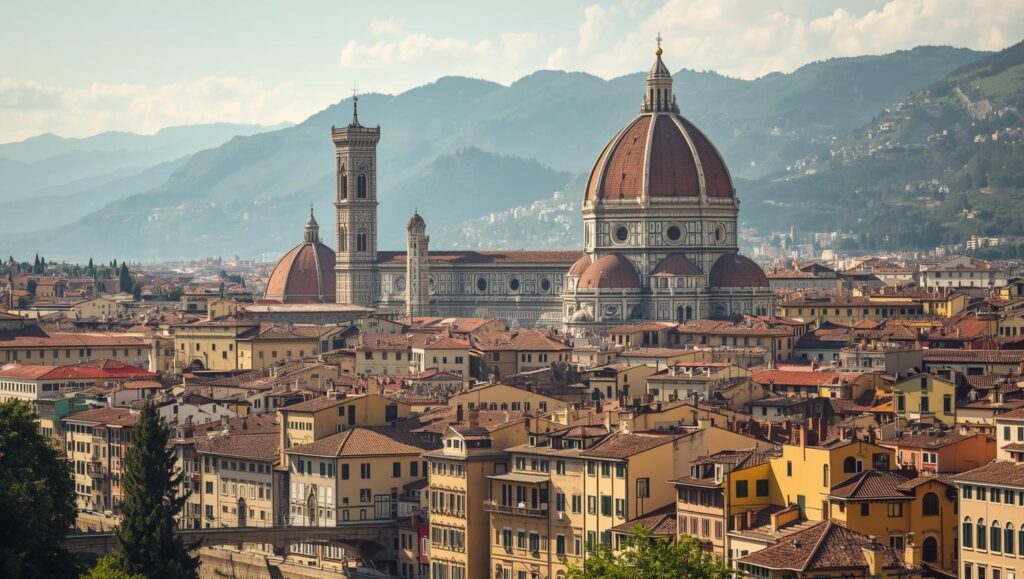
The short answer: three nights
Three nights gives you two full days plus two edges — the evening you arrive and the morning you leave. In Florence those edges are worth more than they look, because the day-trip buses from Rome and the cruise coaches from Livorno arrive mid-morning and are gone by six. Before nine and after seven, the centre belongs to people who live there.
Here is what three nights actually buys you.
Day one: the centre, early
Start at the Duomo before the square fills, which in practice means before half past eight. The facade is worth ten unhurried minutes rather than a photograph taken while walking. If you want the dome climb, it is a timed reservation and it is genuinely steep — 463 steps in a space that narrows near the top.
Then get off the obvious line. Walk to Santa Croce, cross to the Oltrarno and spend the late morning where the workshops still are: gilders, frame makers, a handful of leather benches that are not selling jackets to tourists. This is the half of Florence most visitors never cross the river to see, and it is ten minutes from the Ponte Vecchio.
Our private Florence city tour is built around that contrast — the monuments in the first hour, the working city in the second, at walking pace and without a flag.
Day two: the galleries, properly
Two galleries matter: the Uffizi and the Accademia. They are not interchangeable and they should not be done on the same morning.
The Uffizi wants two and a half hours minimum, and rewards four. The Accademia is the opposite: small, focused, and essentially one room that matters. An hour is plenty, and the hour is extraordinary, because the David is one of the few famous objects in Europe that is larger and stranger in person than in reproduction.
Both are closed on Mondays. A surprising number of two-night trips are planned around a Monday, and discover this on the Monday.
The third day: out of the city
This is the day that changes the trip, and it is the first one people cut.
Chianti begins about forty minutes south — close enough that you can be standing in a vineyard by ten and back for dinner in town. Our Chianti day exists because the drive itself is half the point: cypress, gravel roads, and villages where lunch takes two hours because that is how long lunch takes.
The alternatives are good too. Siena and San Gimignano are the medieval counterweight to Florence — a different Tuscany, harder and older. Pisa and Lucca work best as a pair, because Pisa alone is ninety minutes of tower and Lucca is the town you did not know you wanted.
If you only have one day
It happens, and it is not a disaster. But make two decisions and the day holds together.
Sleep in the city the night before. A day that starts with an eleven o’clock arrival from Rome and ends with a five o’clock train gives you only the crowded hours, in the heat, in the queue.
And pick one gallery. One day is enough for the Duomo, the Uffizi and a long walk in the Oltrarno. It is not enough for the Duomo, the Uffizi, the Accademia, the dome climb and a Chianti tasting. Trying for all five is how people come home describing Florence as exhausting.
When to add a fourth night
Add a night if any of these are true: you want both Chianti and a hill town, you are travelling in July or August when the middle of the day is unusable, you are with someone who tires easily, or you are the sort of traveller who would rather sit in one piazza for two hours than see two more churches.
That last one is not a small point. Florence is compact enough that a fourth night does not mean more ground — it means less rush over the same ground, which in this city is the better trade.
The season changes the arithmetic
In November and February, three nights feels generous. The galleries are bookable two days ahead, the light is low and clean, and you can stand in front of the Birth of Venus without a shoulder in the frame.
In late July and August, three nights feels tight. Florence sits in a river basin ringed by hills, which means the heat settles and stays. You will effectively be working with mornings and evenings, and the city itself half-empties as Florentines leave for the coast.
May, June and September are the sweet spot and everyone knows it, which is why those are also the months when the Uffizi sells out a week in advance.
So: how many days?
Three nights if the trip allows it. Two if it does not, arriving the evening before. One only if you sleep in the city and accept that you are choosing a slice rather than the whole.
And whatever you choose, give the first morning to walking rather than to a ticket queue. Florence makes its case early, in the hour when the shutters go up and the streets still smell of bread rather than sun cream.
We plan private days in Florence and Tuscany for travellers who would rather feel a place than tick it off. See how we work, or tell us what you have in mind.